Why a cold email template saves time and where it stops helping
A cold email template exists because reps and founders keep rewriting the same first message. Research and manual CRM logging already eat most of the selling day, so drafting from scratch costs time you do not have.
A good template gives you speed and a consistent structure. It also makes handover easier, because a new rep can pick up a colleague's sequence without guessing. However, it cannot fix weak targeting or thin personalisation, so a well-written email sent to the wrong person still gets ignored.
Below are ready-to-copy examples, each with a note on when to use it.
What a cold email template for B2B should contain
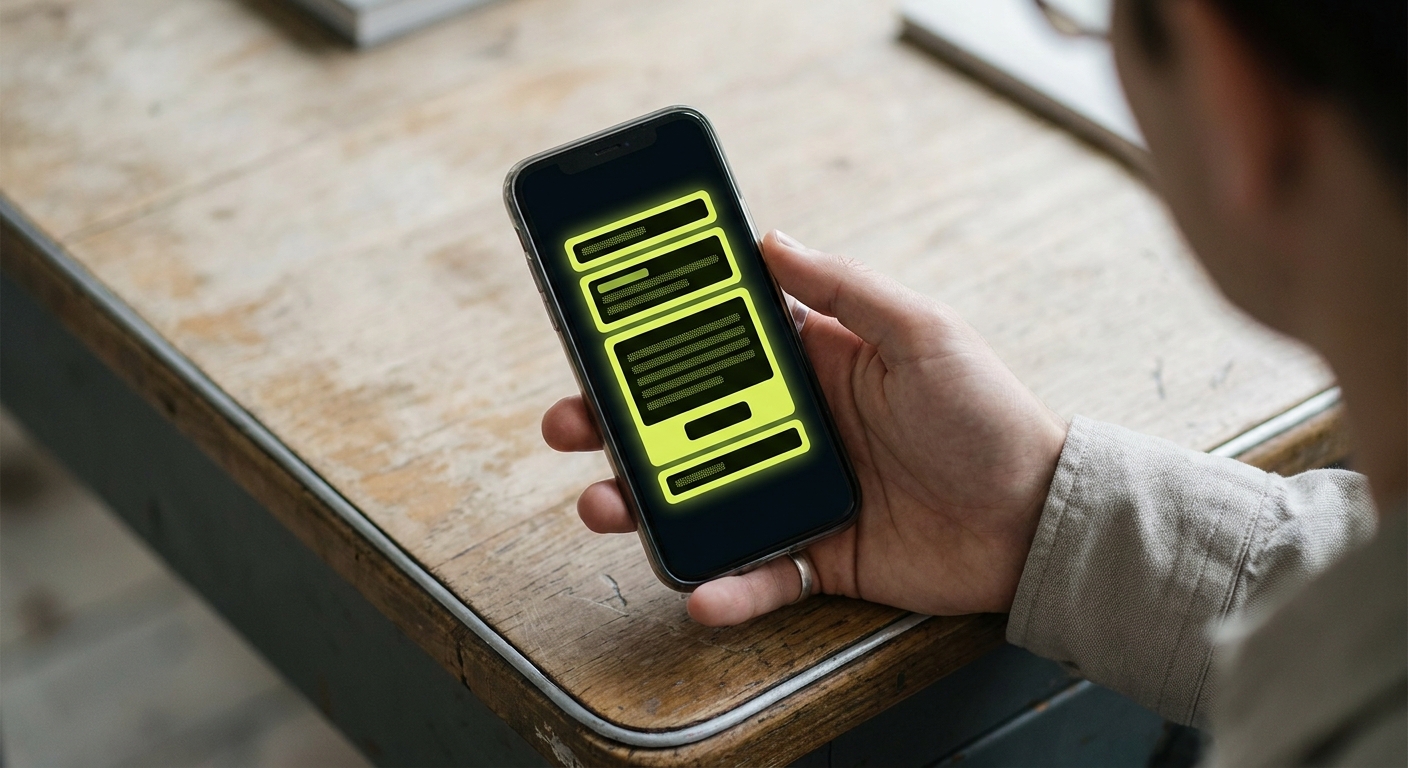
Every cold email template needs five parts, and each has a size limit. Keep the whole email under 120 words, because buyers skim on their phones.
- Subject line: three to six words, no clickbait.
- Opening line: one sentence that shows you researched the person.
- Value statement: two sentences on what you offer and who it helps.
- One ask: a single question, such as a 15-minute call.
- Sign-off: your name, role and a short opt-out line.
Also check your sending setup, because a good template still fails in the spam folder. Our B2B email deliverability guide covers it. For EU recipients, read the GDPR guide for B2B outreach before you send.
Structure and length
A good cold email template has five parts and fits in 60 to 100 words. Most of your prospects will open it on a phone, so short emails get read.
First, write a subject line under 50 characters. Then add one opening line about the prospect, one sentence on their problem, one sentence of social proof, and one clear question as the call to action.
Copy this blank skeleton and fill in each bracket:
- Subject: [under 50 characters]
- Hi [first name], [one line about them or their company].
- [One sentence on the problem they likely have.]
- [One sentence of proof, such as a result for a similar company.]
- [One question they can answer with a short yes or no.]
GDPR basics for cold email in the EU
Every cold email template you send to EU prospects needs a lawful basis. For B2B contacts, that is usually legitimate interest under GDPR. The message must relate to the person's job role, and you should be able to explain why you wrote to them.
Also, name yourself and your company in the signature. Then add a one-line opt-out, such as "Reply STOP and I won't contact you again."
However, German rules are stricter. The UWG requires prior consent for email advertising, including to business addresses. So cold outreach in Germany needs either that consent or an existing customer relationship.
Because you may need to prove consent and opt-outs, store those records in an EU-hosted system. This is general information and not legal advice, so check your setup with a lawyer.
Cold email template for a first contact: 4 versions
Each version below is a copy-ready cold email template with a subject line and a note on when it fits. Swap the bracketed parts, then cut anything that does not apply. Keep every email under 100 words.
Version 1 works when you share a mutual contact. The first line carries trust, so it gets the highest reply rate.
Subject: [Mutual contact] suggested I write
Hi [First name], [Mutual contact] said you are reworking how [Company] handles new accounts. I help [role] teams fix [specific problem]. Last quarter, [similar company] cut [metric] by [number] in [timeframe]. Could we talk for 15 minutes on Thursday?
Version 2 works when something just happened at the prospect's company: a funding round, a new hire, or a market entry.
Subject: Congrats on [event]
Hi [First name], I saw that [Company] just [event]. Teams in that phase often struggle with [problem]. For example, [similar company] fixed it by [action]. Want me to send a two-line summary of how?
Versions for cold prospects and EU buyers
Version 3 suits a prospect with no trigger and no connection. Lead with a problem you know their role faces.
Subject: Missed follow-ups at [Company]?
Hi [First name], most [role] teams lose deals because of a missed follow-up, not a weak pitch. I work with [industry] sellers to [outcome]. Do you track follow-ups in one place today, or across several apps? A one-line answer helps me see if I am useful.
Version 4 fits EU prospects, where GDPR makes a transparent opener sensible. It also suits a softer, give-first approach.
Subject: A checklist for [Company]'s sales team
Hi [First name], I found your work email on [source] and am writing about [topic]. I put together a one-page checklist on [subject] that other [role] teams use. Should I send it over? If you prefer no further emails, reply "stop" and I will delete your details.
Does your cold email template get a reply, then go quiet?
A prospect answers your first email on Monday. Then they message you on LinkedIn on Wednesday and send a WhatsApp note on Friday. Those conversations live in three apps, so nobody remembers who owes whom a reply.
The deal cools off. Your cold email template did its job, but the thread got lost anyway. Most replies die in the gap between channels. A missed follow-up on day five is usually where it happens.
Have you lost a warm lead this month because you forgot to follow up?
Referral or mutual contact opener
This cold email template works best in relationship-driven markets, where trust travels through people. Germany is a good example: buyers want a reference before they want a pitch. Name the connection in the first line and say what the person told you.
For example: "Anna Weber at Kroll Logistics suggested I write to you. She mentioned your team is replacing its quoting process this quarter."
Only use a connection that is real. Ask your contact first, because a forced name drop costs more trust than a plain intro. Then add one sentence on why you are writing and one clear question. Plan your follow-up for day five, since a referral email still gets buried.
Trigger event opener
This cold email template gives you a reason to write that the prospect already cares about. A funding round, a new hire, a product launch, or a job post all signal that priorities just changed. Your first line shows you did your homework.
Example: "Hi Anna, I saw Nordwerk just opened two sales roles in Berlin. Teams that grow this fast often lose follow-ups across email and LinkedIn. How are you tracking them today?"
Find these signals through LinkedIn Sales Navigator alternatives, company news pages, press releases, and careers pages. Check the founder's recent LinkedIn posts too. Keep the email to three sentences and send it within a week of the event.
Short question-only opener
This cold email template is two sentences long and contains one question. Senior buyers often read on a phone, so a short message gets answered where a long pitch gets skipped.
"Hi Anna, I saw your team opened a second office in Lyon. Who handles supplier conversations there?"
The trade-off is reach. Cold lists reply less to a bare question, because the message gives no reason to answer. Warm contacts reply more often, since they already know your name and a quick question feels natural.
Use it for people you met at an event or messaged on LinkedIn. For a cold list, add one line of context first. Note the send date so you can follow up on day 5.
Cold email template for follow-ups that get answered
Most deals stall because nobody follows up on day 5. So build your cold email template as a sequence. Each email should add one new reason to reply.
- Day 1: A short intro, one problem you solve, and one question.
- Day 3: A reply on the same thread with a relevant customer result.
- Day 5: A two-line nudge that offers a 15-minute call.
- Day 8: A useful resource, such as a short checklist.
- Day 12: A polite close asking whether you should stop writing.
However, email alone misses people. Pair it with a LinkedIn touch, as shown in our multichannel outreach sequence article. For timing rules by deal stage, see the follow-up cadence guide.
Day 3 and day 5 nudges
Most replies to a cold email template sequence come after the first follow-up. So keep the day 3 bump to one line that is easy to answer.
Day 3: "Hi Anna, nudging my note from Monday. Is tracking follow-ups on your list this quarter?"
The day 5 email adds something new. A short case result or a relevant link to a useful guide both work. However, do not repeat your first pitch.
Day 5: "Hi Anna, a client in [industry] cut follow-up time by [X%] after moving her chats into one place. Here is the two-minute write-up: [link]. Worth a short call this week?"
Also, send both at the time of day Anna opened your first email, if you can see it.
Day 10 and the closing email
The last message in your cold email template sequence should be short and polite. Give the prospect an easy way out, and ask whether a colleague should handle this instead.
Try this wording: "Hi Anna, I have not heard back, so this is my last note. If the timing is off, no problem. If someone else on your team owns this, could you point me to them?"
Then decide what happens next:
- No reply at all: stop. A fifth email adds nothing, and you should honour any opt-out straight away under GDPR.
- Several opens but no answer: send a short LinkedIn connection request with a one-line note.
- One interested reply that went quiet: pick up the phone and call.
Also log the outcome, so you know when to try this contact again.
Follow-up after a call or meeting
Send this recap within two hours, while the call is still fresh. Because people forget details fast, the email should carry one agreed next step, one date and one attachment. Adapt your cold email template for this moment.
Subject: Recap of our call and next step on [date]
Hi [Name], thanks for your time today. We agreed that [next step] by [date]. I attached [one file], which covers [the topic you raised]. If the date changes, reply and we will adjust. Speak on [date].
However, skip the second and third attachment. A reader who opens one file acts on it, while a reader who sees three files postpones. So pick the document that answers their biggest question.
Cold email template examples by sector
Each cold email template below uses one angle that fits the buyer. Replace the brackets with your own details. For longer sequences, see the B2B SaaS sales playbook and the guide to agency new business.
- SaaS, trigger event: "Hi [Name], I saw you hired reps this quarter. Follow-ups often slip at that size. Can I show you a fix in 15 minutes?"
- Agencies, specific idea: "Hi [Name], your [Client] campaign caught my eye. I have one change for its landing page. Want it by email?"
- Distribution, reliability: "Hi [Name], we deliver [Product] across the EU in [X] days. May I send a price list for your main lines?"
- Consultants, referral: "Hi [Name], [Contact] suggested I write. You help [audience] with [problem]. May I share one idea?"
B2B SaaS and tech
Tech buyers skim, so this cold email template opens with a number they can check. The ask stays small: a short demo or a 7-day trial instead of a 30-minute call.
Subject line: [X%] less follow-up time for [Company] reps
Hi [Name], [Similar Company] cut follow-up time by [X%] after moving its outreach into one inbox. I saw [Company] is hiring two SDRs, so this may apply to you. Would a 10-minute demo this week work? Or you can try it free for 7 days, no credit card needed.
Because SaaS buyers compare tools quickly, name one metric and one next step. Then keep the email under 80 words.
Agencies and consultants
Many agency sites list five services and show a case study from two years ago. That gap is your opening. Because the offer is unclear, a generic cold email template gets ignored.
So start with what you saw. For example: "Your site lists SEO, paid social and branding, but the newest case study dates from 2023. Are you still taking on new retainers?" Then make one offer: a 15-minute landing page audit of their top service page.
Also plan the follow-up before you send. On day 5, reply with one line about the audit and one finding. Because the first email already named something real, the second reads as a continuation, not a nudge.
Distribution and vendor sales
Buyers read your email on a phone between visits, so this cold email template stays short. Put the facts they use to compare suppliers in the first lines.
Attach a one-page price list as a PDF that opens cleanly on mobile. State the minimum order quantity and the standard lead time in the body, for example "MOQ 200 units, delivery in 10 working days." Then offer a sample request that takes one word to answer.
- Subject: "Price list and 10-day delivery for [product]"
- Line one: what you supply and who you supply it to
- Line two: minimum order and lead time
- Line three: "Reply SAMPLE and I will ship one this week."
Also, follow up on day 3 if nobody answers. Buyers often reopen old emails when they plan their next order.
Independent coaches and founders selling for themselves
I sell for a living, so I know the feeling when you are the whole sales team. You send a pitch, then lose the reply somewhere between WhatsApp and your inbox. So keep your cold email template short, and keep every follow-up date in one place.
One client, a personal fitness coach in Germany, cut his admin time by 30% after moving his conversations into Leadrealizer. He also stopped missing follow-ups. Because the app runs on his phone, he updates deals between sessions.
Want to see how it would work for you? Book a 15-minute call with me, and we will go through your current follow-up routine together.
Adapting a cold email template for DACH and other markets
German-speaking buyers expect formal address, so use "Sie" and a surname until they say otherwise. They also want proof. Add one named reference and a line on GDPR, such as where you store their data. Our DACH sales culture article covers the details.
For first contact, email and LinkedIn work better than WhatsApp, which feels too personal too soon. Also write in the buyer's language. A literal translation of an English cold email template reads stiffly, because friendly openers and casual asides sound odd in German. So rewrite it from scratch. Then check time zones and send during local business hours. Our cross-border B2B outreach guide shows how.
Personalising a cold email template without losing hours
Give each prospect five minutes. Read their LinkedIn profile and their latest company news, then note one detail worth mentioning. Our lead research checklist shows what to look for.
Then apply one rule: the offer, the proof point and the call to action stay fixed. Only the opening line changes. So you edit one sentence per email instead of rewriting the whole message.
An AI sales companion can draft that opening line from your notes. However, you read and approve every message before it goes out. For more on how this works, read our article on AI in sales outreach.
Fixed and variable lines
A good cold email template has two layers. The fixed layer stays the same in every send: your offer, one proof point and the call to action. The variable layer changes for each prospect: the opener, the trigger and one specific detail.
Because you write the fixed lines once, they save time. The variable lines earn the reply, since they show you looked at the person.
For example, a consultant selling onboarding workshops to an HR lead could send this:
- Opener: "Hi Anna, congrats on the new Munich office."
- Trigger and detail: "Hiring 12 people there usually puts pressure on onboarding."
- Fixed lines: "We run four-week onboarding sprints for growing teams. Clients usually cut ramp-up time by a third. Do you have 15 minutes on Thursday?"
Then swap the first two lines for the next prospect and leave the rest alone.
Human approval before sending
A good cold email template still needs a person to read the AI draft before it goes out. AI can invent a detail about a prospect's company or cite a funding round that never happened. So check every fact against what you know.
Tone and GDPR fit also need a human eye. A draft may sound too pushy for a German buyer, or it may use personal data you have no basis to use.
The review takes under 30 seconds per email:
- Confirm the name, company and any facts in the first two lines.
- Check that the tone suits the contact and the channel.
- Delete any personal detail you cannot justify under GDPR.
- Approve and send.
Leadrealizer works this way: the AI companion drafts, and you approve every action before it sends.
Keeping your cold email template, replies and follow-ups in one place
A good cold email template is easy to write. The hard part starts after you hit send. One prospect answers on WhatsApp, another replies to your LinkedIn message, and the template sits in a Google Doc nobody reopens.
So the template, the replies and the follow-ups end up in three different places. Then the day-5 nudge gets buried. That is how most deals die: on a quiet Tuesday when nobody followed up.
Leadrealizer is a mobile-first CRM powered by human-supervised Agentic AI, and it keeps the whole thread in one place:
- The unified inbox shows WhatsApp, email, LinkedIn DMs and call logs per contact, so you see the full history before you reply.
- The daily action plan tells you each morning who to follow up with, what you discussed last and what to say next.
- The AI companion drafts messages from your cold email template and suggests next steps. You approve every action before anything goes out.
- The pipeline view shows every deal's status on your phone, and you update it in seconds.
For example, say you send a cold email template to 20 prospects on Monday. Three reply by email, one on LinkedIn and one on WhatsApp. All five land in the same inbox. Then the AI companion reminds you about the quiet ones before those deals go cold.
Manager visibility and pricing
Managers get a dashboard with live pipeline visibility, so they stop chasing updates before the Friday review. Reps also keep their records current, because logging a call on a phone takes seconds.
HubSpot and Pipedrive work well at a desk. However, they were built desk-first for larger teams, and setup takes time a ten-person team rarely has. Costs also climb as you add seats and features. Leadrealizer's core plan is €25 per month, or €240 per year with the annual discount.
You can test it before paying. The 7-day free trial needs no credit card, and the app runs on iOS and Android. A Cologne-based team of B2B salespeople builds it, and they have lived the same scattered-chat chaos you probably know.
If you are still weighing options, read our CRM for small sales teams comparison. The mobile CRM buyer's guide then covers what to check before you commit to any tool.
Tracking what works
Track three numbers for every cold email template you send. Then you can compare templates without guessing.
- Reply rate: replies divided by emails sent.
- Positive reply rate: replies that show interest, divided by emails sent.
- Meetings booked: calls or visits that land in the calendar.
Test one change at a time, such as the subject line or the call to action. Run each version for 50 to 100 sends before you judge it. Smaller batches swing too much to trust.
Also keep every reply in one place, so follow-ups don't get buried. Leadrealizer puts your email, LinkedIn and WhatsApp conversations in a single inbox. Start your 7-day free trial, no credit card required.
Frequently Asked Questions
What is a cold email template?
A cold email template is a reusable draft for prospects who have never heard from you. It has a fixed structure: a subject line, a one-line opener, a short statement of value and one clear ask. You change the details for each recipient, so the message still reads as written for them.
How long should a cold email template be?
Keep it between 50 and 120 words. Many prospects read on their phone, so short paragraphs and one ask per email work best. Also, cut anything that does not help the reader decide whether to reply.
Can I send a cold email template to prospects in the EU?
Rules differ by country. Germany, for example, generally requires prior consent for unsolicited email, even in B2B, under the UWG. So check local law before you send, name where you got the contact data, and add a clear opt-out line. For anything unclear, ask a lawyer who knows GDPR.
How many follow-ups should a cold email template include?
Plan for three or four emails over two to three weeks. Each one should add something new, such as a short customer example or a direct question. Because most deals stall on a missed follow-up, set the reminder on the day you send the first email. In Leadrealizer, the next follow-up appears in your Daily Action Plan, so it does not get buried.
How do I personalise a cold email template without hours of research?
Fix the structure and change two parts per prospect: the trigger and the problem. A trigger can be a recent LinkedIn post, a hiring page or a product launch. Then keep a few ready-made lines per segment. The AI Sales Companion in Leadrealizer drafts the message from your contact history, and you approve it before it goes out.